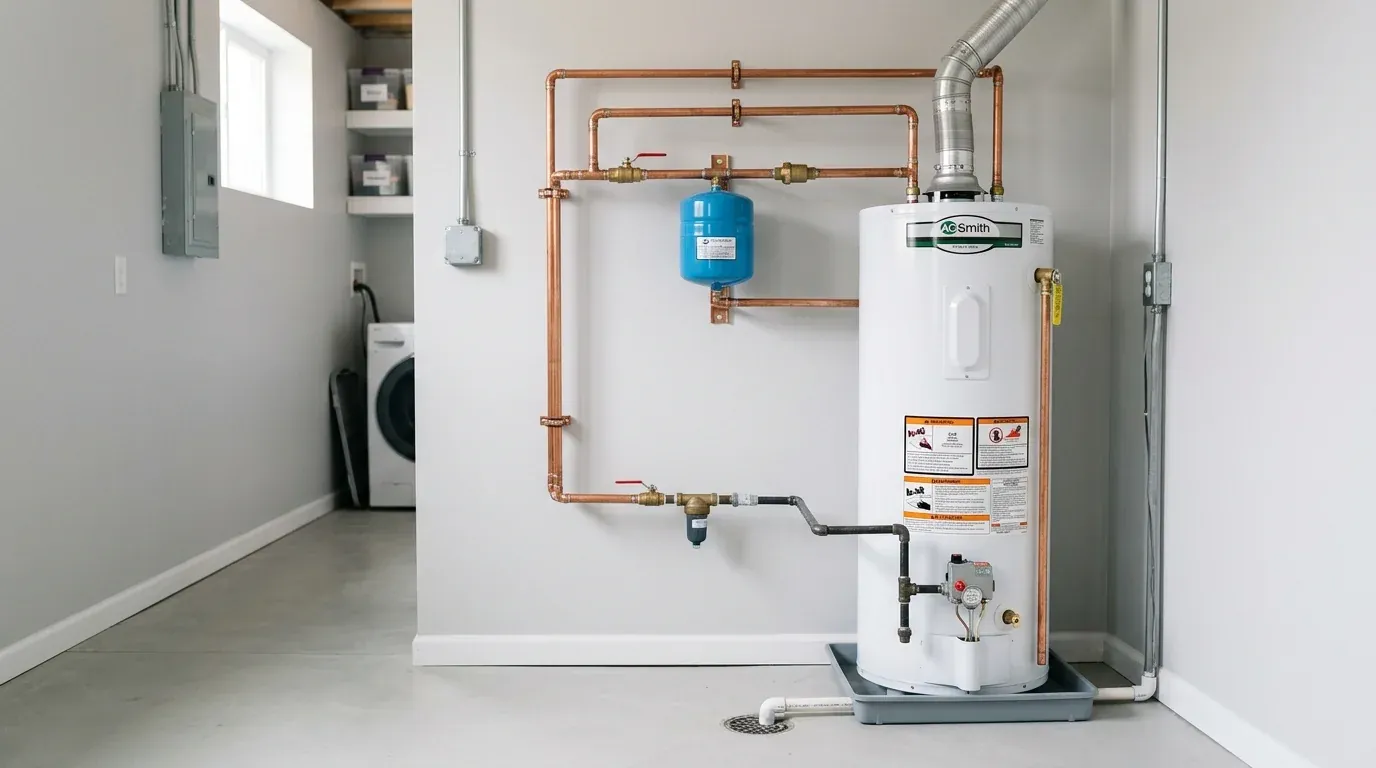
Restoring domestic hot water requires targeted electrical and combustion diagnostics rather than guesswork. When a water heater fails, symptoms like lukewarm showers, popping noises, or standing water around the jacket base reveal specific component breakdowns. On electric models, multimeters isolate open-circuit lower heating elements from tripped high-limit switches or faulty upper thermostats. Gas systems require precise millivolt testing across the thermocouple or thermopile, pilot burner cleaning, and draft verification along the flue hood. Plumbers test water line pressure, inspect the temperature and pressure relief valve, and check for galvanic corrosion at pipe nipples. Repairing functional storage tanks under ten years old preserves your equipment investment while stopping minor leaks from causing costly floor and structural damage.
Core Procedures & Diagnostics
Electrical Diagnostics
Testing 240-volt continuity across upper and lower thermostats and heating elements.
Gas Burner Servicing
Cleaning pilot orifices, testing thermocouple millivolts, and calibrating gas control valves.
Relief Valve Testing
Inspecting temperature and pressure relief valves to prevent overpressurization above 150 PSI.
Dip Tube Replacement
Swapping cracked polypropylene dip tubes to direct incoming cold water to the burner base.
Frequently Asked Questions About Water Heater Repair
Calcium minerals settling onto the tank floor form an insulating crust over the burner. Water trapped underneath this scale boils into steam pockets that collapse violently, creating a loud popping sound. Draining the sediment clears the heating zone and eliminates the noise.
Electric tanks typically lose heat when the upper thermostat trips or the lower element burns open. Gas heaters shut down if a draft blows out the pilot or an oxidized thermocouple fails to send safety voltage to the gas valve. Technicians test both circuits to identify the failed component.
Plumbers can swap a plastic drain valve by creating a vacuum inside the vessel. Shutting all household hot water faucets and the cold inlet stops air intake, allowing a fast valve swap. Threading a durable brass ball valve eliminates weeping plastic threads.
Disconnecting circuit power, isolating water lines, and threading in a fresh high-watt-density element takes roughly forty-five minutes. The technician fills the vessel completely to purge air before reconnecting electrical leads, preventing dry-fire element burnout.
Thermal expansion or a defective valve spring causes steady weeping down the discharge line. Without a functioning expansion tank, water pressure can exceed 150 PSI during heating cycles. Installing a thermal expansion tank or replacing a scaled valve stops the drip.
Pressing the red button behind the upper insulation resets power after an over-temperature trip exceeding 170 degrees. While resetting provides temporary heat, persistent tripping indicates a shorted heating element continuing to boil water unmonitored.
Brown hot water points to internal steel oxidation, usually indicating the sacrificial anode rod has completely dissolved. Running cold water isolates the problem; clear cold water confirms rust originated inside the water heater rather than the municipal supply.
Manufacturers print the unit age within the serial number on the rating label adhered to the tank side. Technicians decode the first four digits to determine whether the vessel is approaching the ten-year life expectancy threshold.
Book Water Heater Repair
Speak with our dispatch team to check local technician availability and get an upfront price estimate.