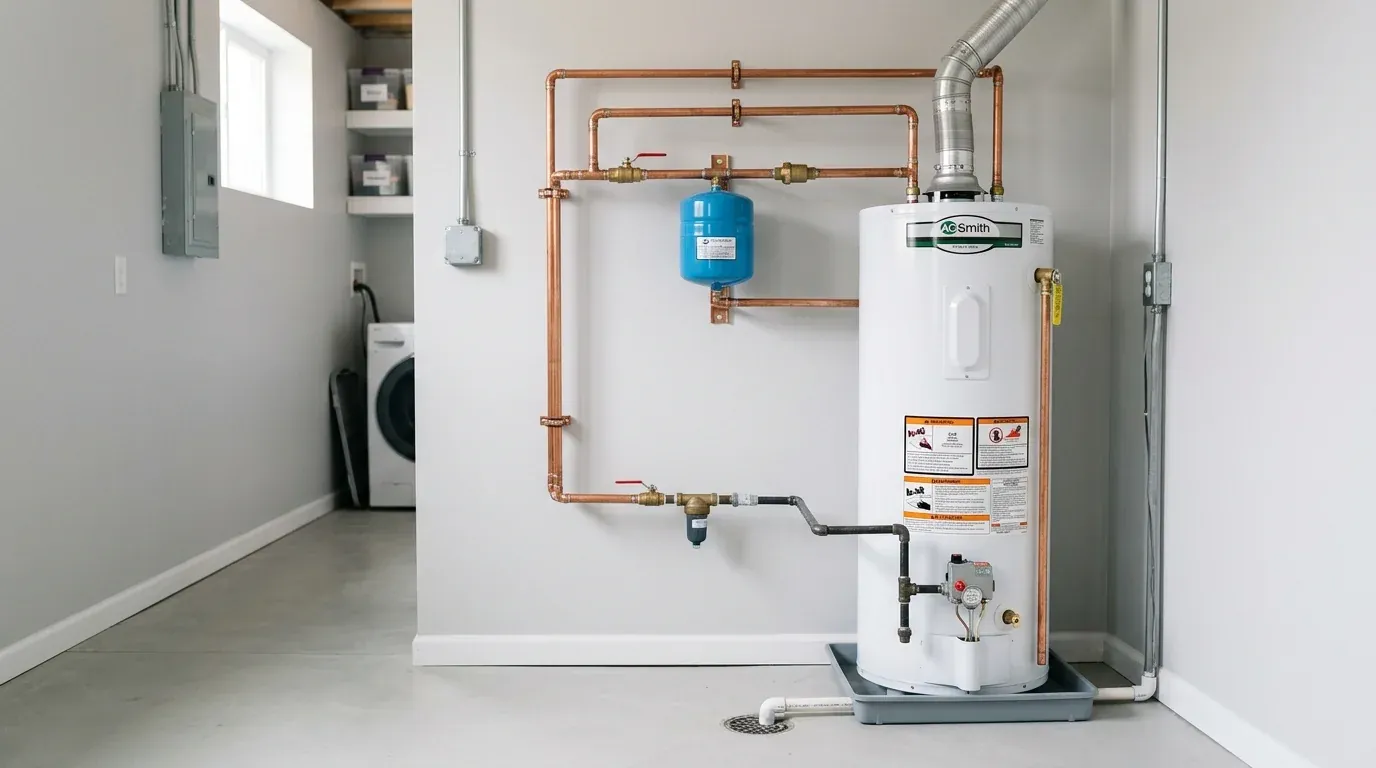
Neglecting water heater maintenance allows dissolved calcium carbonate to harden into thick sediment crusts, reducing efficiency and fatiguing welded tank seams. Annual preventative servicing preserves factory energy ratings, quiet burner operation, and extends tank life beyond the standard decade mark. Plumbing specialists connect heavy-duty transfer pumps to evacuate sediment slurry from the tank floor, inspect and replace depleted sacrificial anode rods, and test dielectric unions for galvanic corrosion. Technicians verify thermostat calibration, inspect flue draft on gas models, and test the manual lever on temperature and pressure relief valves. Routine preventative maintenance protects your property against sudden leaks, restores rapid water heating, and saves hundreds on monthly utility bills.
Core Procedures & Diagnostics
Sediment Evacuation
Flushing mineral crust and limestone scale from the vessel floor to restore heat transfer.
Anode Rod Replacement
Installing new magnesium or aluminum-zinc rods to shield steel tank walls from rust.
Thermal Efficiency Check
Testing heating element resistance and gas burner combustion for peak energy savings.
Safety Valve Testing
Operating temperature and pressure relief valves to verify unobstructed emergency discharge.
Frequently Asked Questions About Gas & Electric Water Heater Maintenance
Draining and flushing the vessel annually removes loose mineral sediment before it bakes into an impenetrable calcium rock. In areas with exceptionally hard municipal water, semi-annual flushing prevents burner overheating and popping sounds.
The magnesium or aluminum anode rod acts as a sacrificial metal designed to corrode via galvanic electrolysis in place of the steel tank. Replacing the rod before it dissolves down to the bare steel core wire prevents the inner tank lining from rusting.
On tanks neglected for over ten years, heavy sediment crust sometimes acts as an artificial plug over deep rust pits. Dislodging that crust can expose existing pinhole leaks, which is why technicians inspect tank integrity before initiating a heavy flush.
Setting the thermostat to 120 degrees Fahrenheit provides ample hot water for domestic showers while preventing accidental skin scalding. Setting temperatures above 130 degrees dramatically accelerates calcium sedimentation and increases monthly energy consumption.
Mineral scale can seize the brass valve seat shut over time, preventing it from venting dangerous excess pressure during an overheat event. Manually lifting the test lever verifies that the valve opens smoothly and reseals without leaking.
Removing calcium crust from electric heating elements allows thermal energy to transfer directly into the water rather than struggling through scale. Clean heating elements heat water in less time, reducing daily kilowatt consumption.
Technicians unthread the hex-head anode rod from the top of the tank to visually inspect its diameter. If the magnesium metal has eaten away, leaving pitted wire exposed, the rod must be replaced immediately to protect the tank.
A comprehensive service includes flushing sediment, checking the anode rod, testing electrical continuity, inspecting gas burner flames, checking the expansion tank pressure, and verifying the relief valve discharge line.
Book Gas & Electric Water Heater Maintenance
Speak with our dispatch team to check local technician availability and get an upfront price estimate.